
Leadhills - Wanlockhead
Geological Conservation Review site | GCR #431 | Mineralogy | Mineralogy of Scotland
Geological Conservation Review site | GCR #431 | Mineralogy | Mineralogy of Scotland
Scotland's geosites are chosen because of their local, national or international importance. Take only photos, leave only footprints: avoid causing any damage to this site. You can walk almost anywhere in Scotland without the need to ask permission or keep to paths, but you have a responsibility to care for your own safety, to respect people's privacy and peace of mind and to cause no damage.
This site is partially a Site of Special Scientific Interest (SSSI). It is an offence to intentionally or recklessly damage the protected natural features of a SSSI, and this includes unauthorised sample collection.
The right of access does not extend to quarries, building sites or any land where public access is prohibited, or to the collection of geological samples.
Largest hydrothermal ore mineral field in Scotland.
The Leadhills-Wanlockhead district is the most important lead-zinc deposit in Scotland, and was actively worked for over 400 years. The deposit comprises over 70 veins (from which 500,000 tonnes of ore was raised) emplaced into Ordovician greywackes and mudstones which are separated from slightly older shales and cherts to the north-west by a reverse fault. This structure brought the older rocks on top of the greywackes and mudstones where they formed an impervious ceiling which impounded the mineralising fluids in fissures below the fault. Exposures of mineralised veins are exceptionally poor, and the mineralogical interest resides mainly in the mine dumps. Over 60 mineral species have been identified making this the most prolific Scottish mineral locality. Primary sulphide ore minerals include galena, sphalerite, chalcopyrite and pyrite, but it is for the rare secondary minerals that the site is world-renowned. The site consists of three component areas. The dumps centred around the New Glencrieff Mine have yielded rare primary and secondary minerals including nickeline, witherite, vanadinite and erythrite. Rare secondary minerals, including leadhillite and caledonite, can also be found in the dumps around Whytes Cleugh. In the vicinity of the Hopeful Vein, the dumps, although overgrown, have produced rare secondary minerals including the only chromium minerals to have been found in the Leadhills-Wanlockhead area. Leadhills-Wanlockhead is one of Scotland's most important mineralogical sites and its continuing research importance is highlighted by the fact that it has, since 1984, yielded four mineral species new to science.
The Wanlockhead Mine Museum (NS 873 129) has ample parking.
The minor road heading NW from the Museum, along the Wanlock Water, later continues on a dirt road, has numerous options for parking to access Glencrieff Shaft (NS 865 133), a 1km return - along a dirt road; and Whytes Cleugh (NS 867 134) 1km return, - via a rough, stoney, valley floor on a vague trail.
Between Leadhills and Wanlockhead NS 881 139
car parking at a roadside pull-off the B797 for the Hopeful Vein -Sarrowcole Vein.
https://chooser.crossref.org/?doi=10.1144%2Fsjg2025-010
Link to article in Scottish Journal of Geology, 2025:
Trace and minor element concentrations in sulfide ore material from the Leadhills and Wanlockhead orefield, SW Scotland.
Abbreviated title: Trace elements in base metal sulfides from SW Scotland. David Currie, Andie Bryce, Neil Burnside, Hannah Grant, Lauren Tuffield.
https://www.researchgate.net/publication/350502829_Chapter_…
Link to GCR article by Colin MacFadyen and others, 2022:
Chapter 5 Scottish mineral Geological Conservation Review sites – Hydrothermal veins and mineral assemblages. Proceedings of the Geologists' Association, Volume 133 (4-5), pages 367-395.
https://sitelink.nature.scot/site/91
Nature Scot Site code: 915 Leadhills - Wanlockhead SSSI
https://largeimages.bgs.ac.uk/iip/mapsportal.html?id=1002312
BGS 1:50,000 Sheet 15E Leadhills Solid 1987
OS Maps
1:50,000 Landranger Series 71 Lanark and Upper Nithsdale
1:25,000 Explorer Series 329 Lowther Hills, Sanquhar & Leadhills - Wanlockhead & Crawford
https://earthwise.bgs.ac.uk/index.php/Leadhills_and_Wanlock…
Leadhills and Wanlockhead - an excursion :
McAdam, A.D., Clarkson, E.N.K. and Stone, P. eds., 1992. Scottish Borders Geology: an excursion guide. Scottish Academic Press.
https://earthwise.bgs.ac.uk/index.php/Lead_and_zinc_ores_of…
Lead and zinc ores of Scotland Area I. The Leadhills–Wanlockhead district
https://geoguide.scottishgeologytrust.org/p/minerals_mining…
Wilson, G.V. 1921. The lead, zinc, copper and nickel ores of Scotland. Special reports on the mineral resources of Great Britain Volume XVII. Edinburgh: HMSO pps: 7-35
https://dgnhas.org.uk/contents_3054
TDGNHAS Series III, Volume 54 (Wanlock and Leadhills Volume) An extended W/L issue p. 75 – 174
The story of mining in the Area and displays in the Museum, along with the Mine Tour are worth visiting and supporting.
The Glencrieff Shaft Area and spoil heaps NS 865 1331km and those up Whytes Cleugh NS 867 134 often show typical minerals.
Wanlockhead is Scotland’s highest Village at 410m. Localities can vary between 300-500m altitude. In adverse conditions this can be prone to low cloud with limited visibility. Caution with traffic and use of hi-viz gear is required if using roadside parking.
Spoil heaps can be very loose and unstable underfoot.
Most shafts are closed off, but not all are marked – caution is required, Old adits are in poor condition and should NOT be entered.
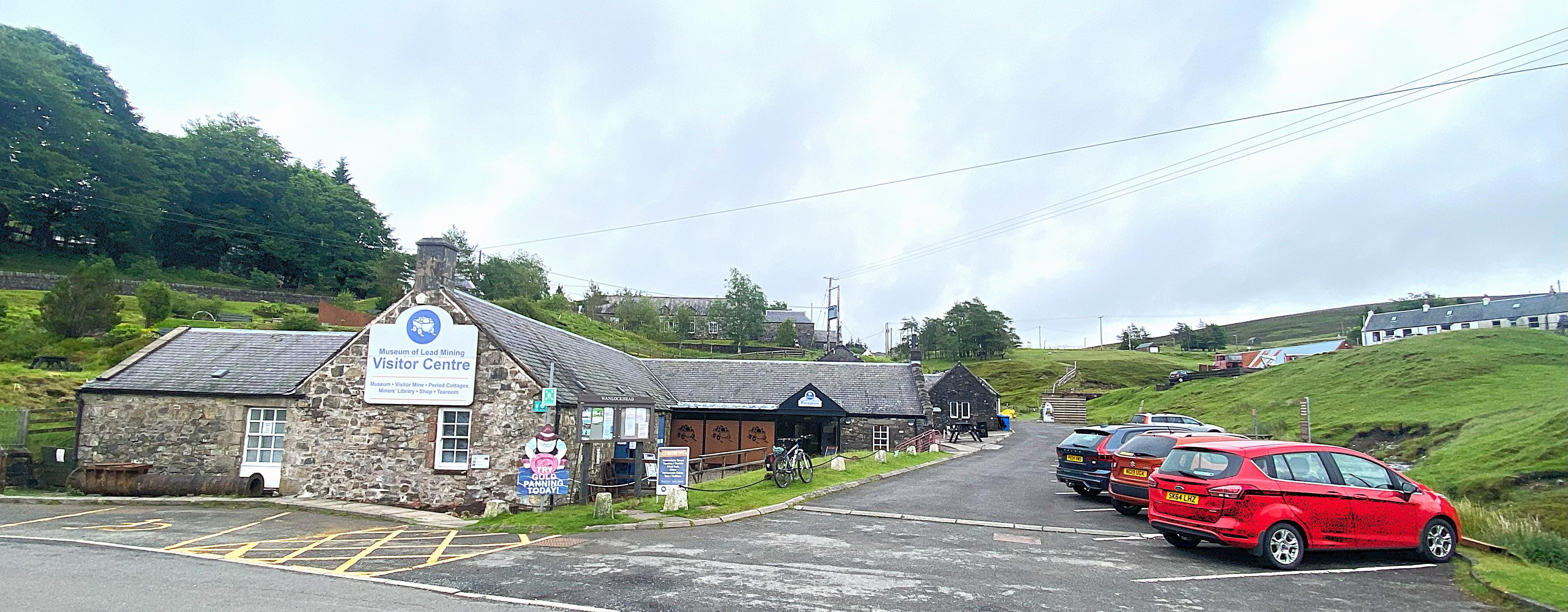
Wanlockhead Mining Museum
John Robson
July 6, 2025
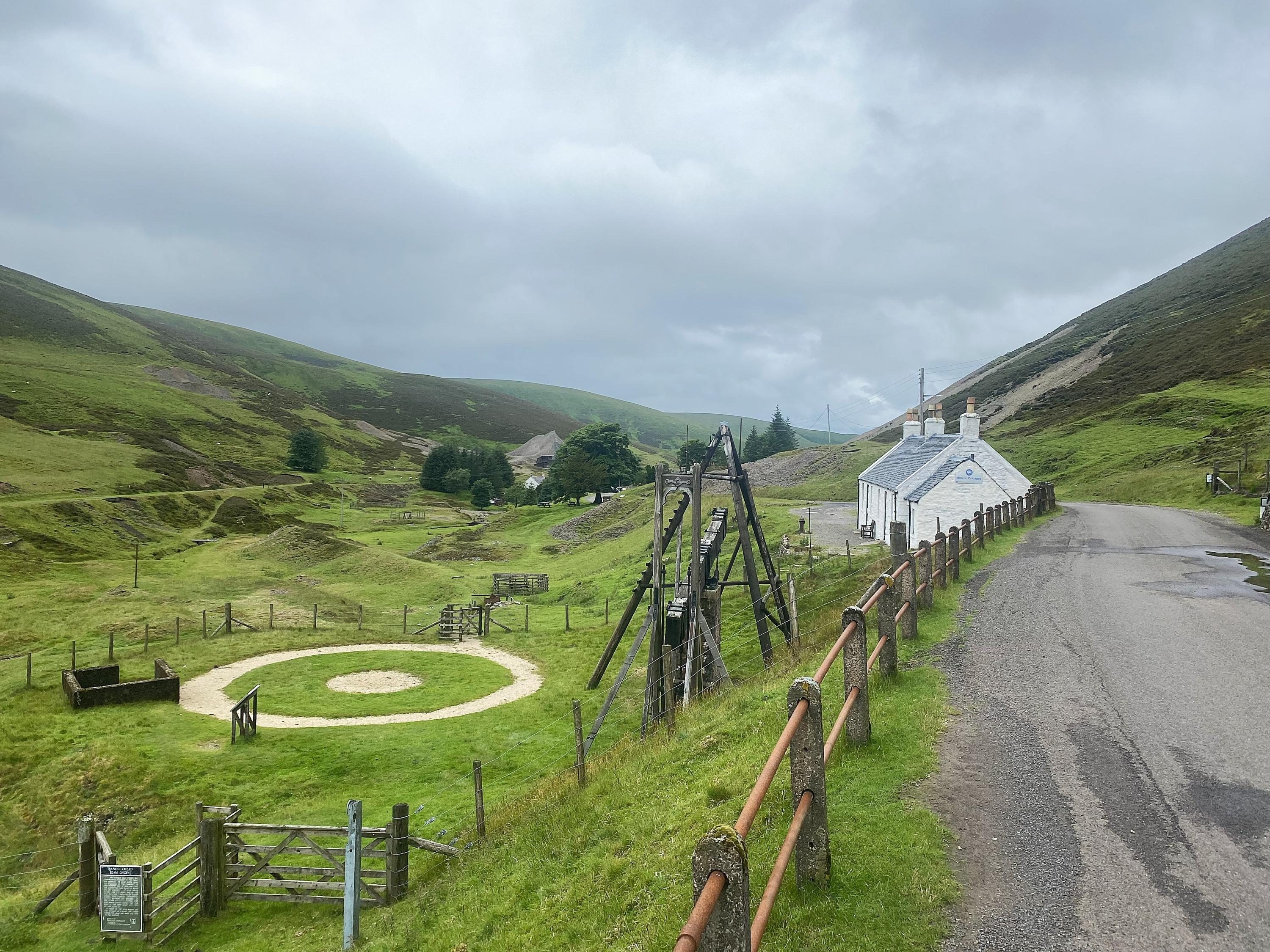
Mine Beam Engine & MinersCottages, looking toward Glencrieff Mine and spoil heap.
John Robson
July 6, 2025
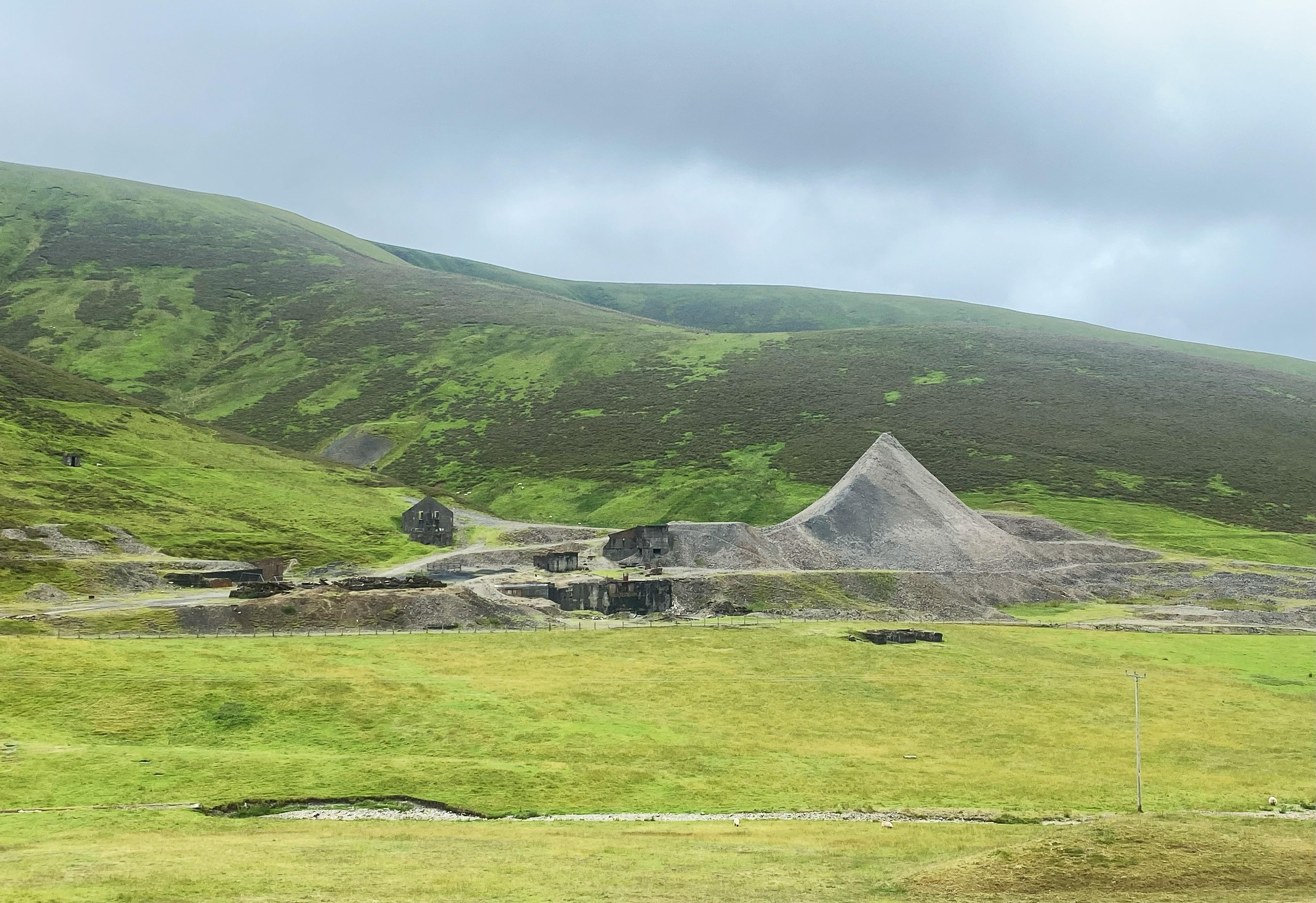
View of Glencrieff Mine and spoil heap
John Robson
July 6, 2025
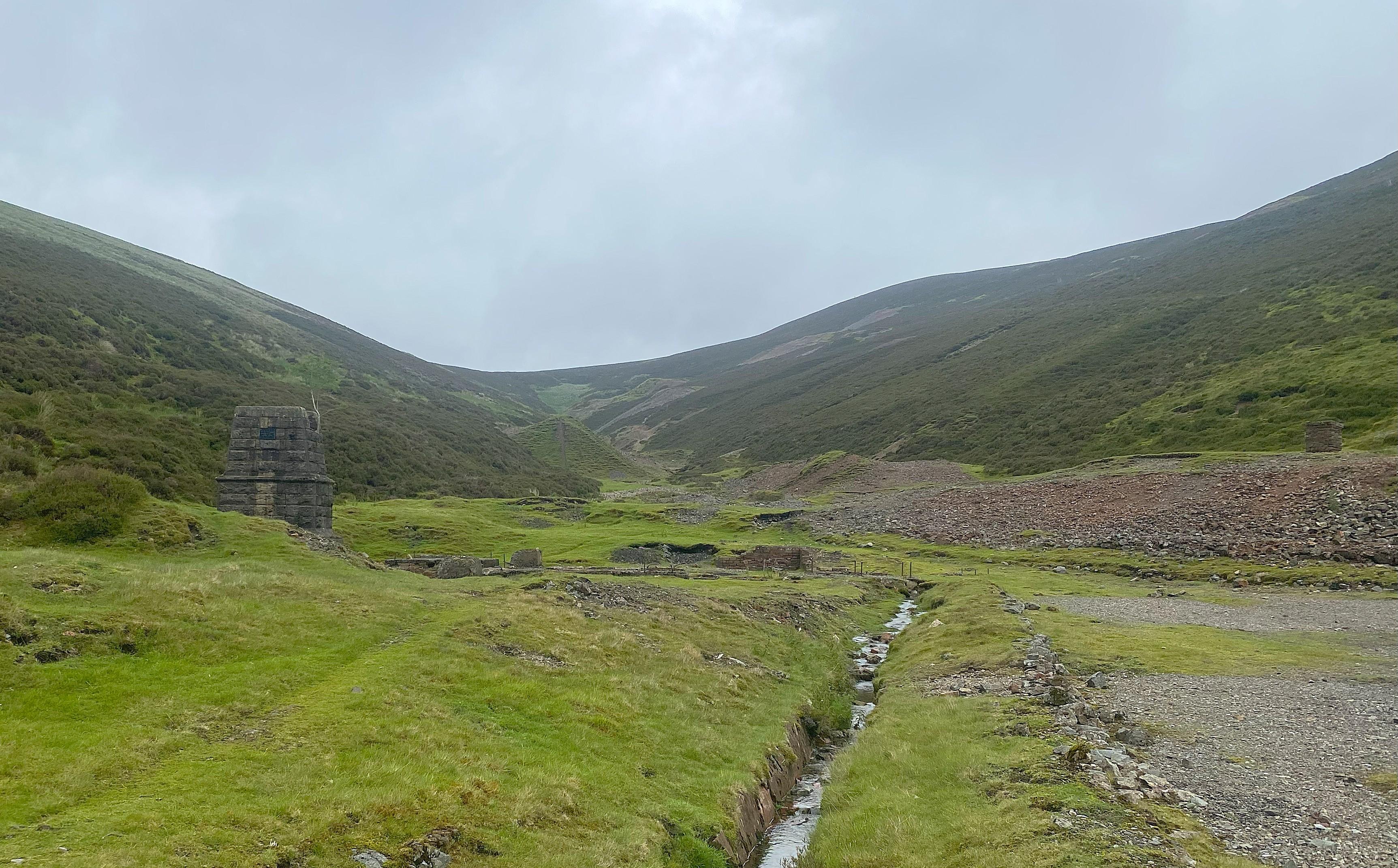
View up Whyte's Cleugh
John Robson
July 6, 2025
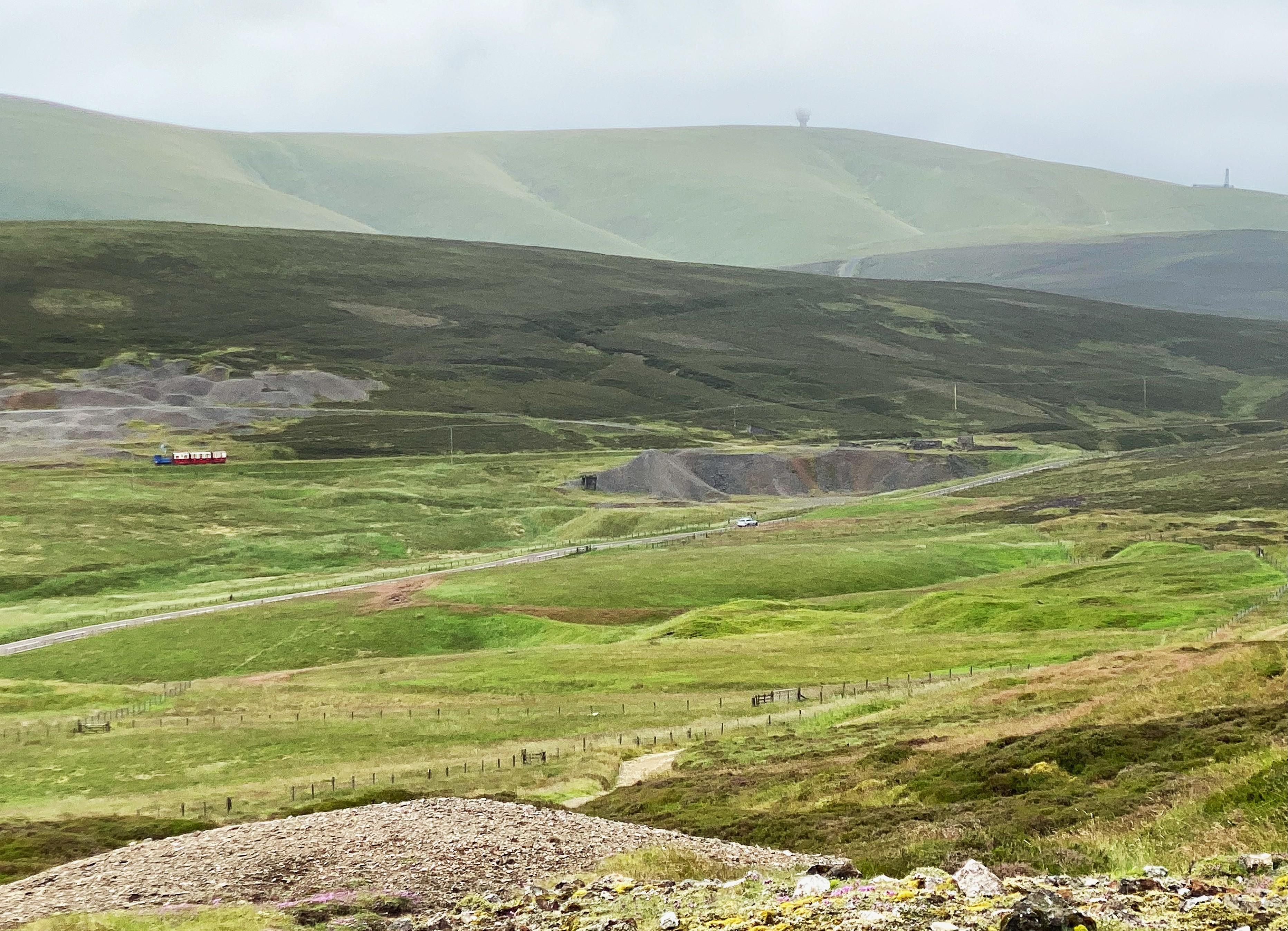
View over spoil heaps of Hopefull Vein Area and to the narrow guage railway line (open at weekends in Summer) toward Glengonnar.
John Robson
July 6, 2025
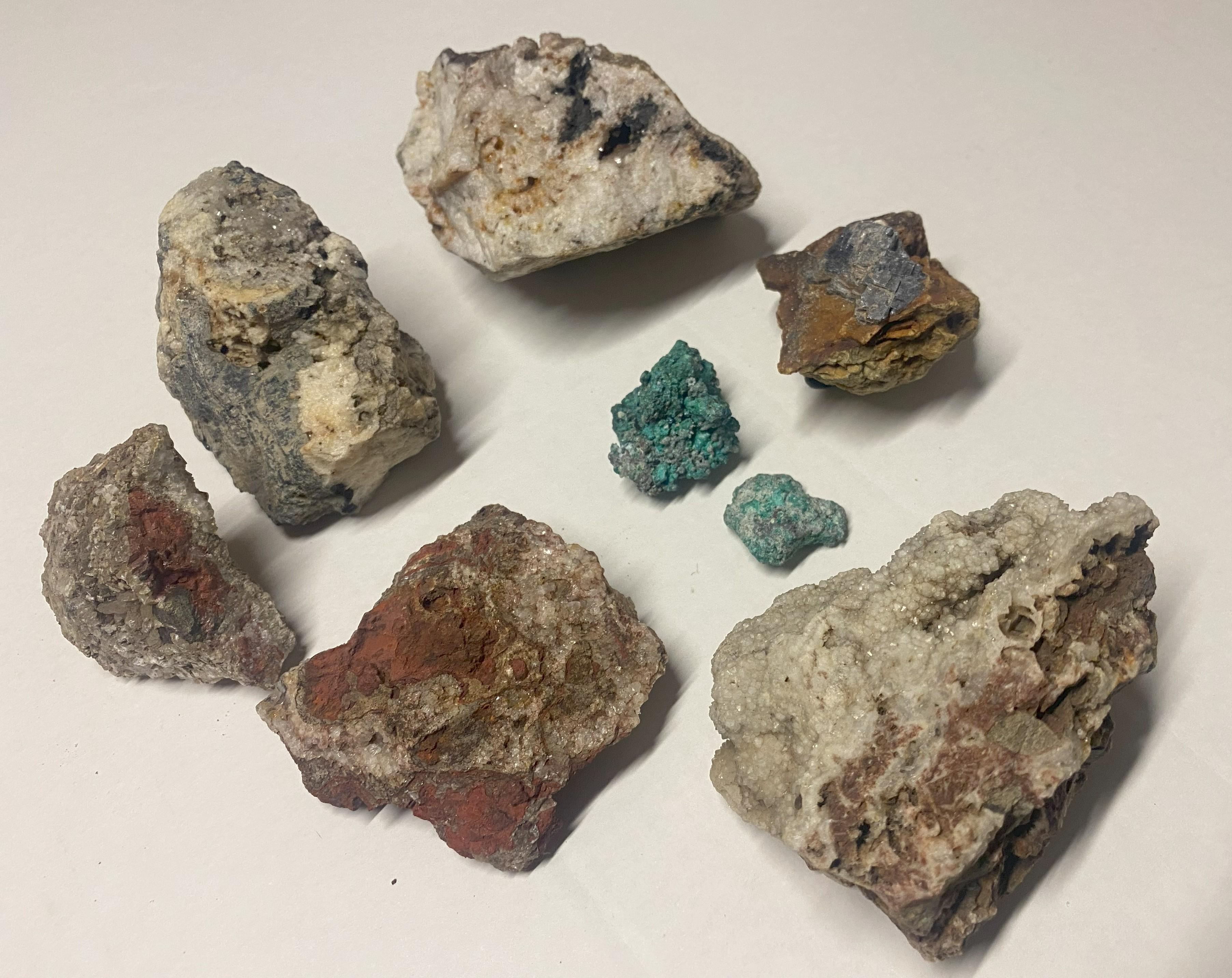
A typical selection of minerals found in mine dumps around Wanlockhead. Including galena, sphalerite, pyromorphite, calcite.
John Robson