
Sango Bay
Geological Conservation Review site | GCR #3285 | Structural and Metamorphic Geology | Moine
Geological Conservation Review site | GCR #3285 | Structural and Metamorphic Geology | Moine
Scotland's geosites are chosen because of their local, national or international importance. Take only photos, leave only footprints: avoid causing any damage to this site. You can walk almost anywhere in Scotland without the need to ask permission or keep to paths, but you have a responsibility to care for your own safety, to respect people's privacy and peace of mind and to cause no damage.
The right of access does not extend to quarries, building sites or any land where public access is prohibited, or to the collection of geological samples.
Superb exposures of the Moine Thrust, associated deformed "Lewisianoid" rocks carried by it and some of the best exposures in the UK of normal faults and their fault rocks in carbonates, associated with basin development offshore.
The Sango Bay outcrops are critical for establishing minimum displacements on the base of allochthonous, mylonite-bearing thrust sheets in northern Scotland. This was first recognized by Peach & Horne in the late 19th century and hence the GCR site is of considerable historical importance. The outcrops are clean and readily accessible, making them admirably suited for study, unlike some other parts of the Moine Thrust Belt. Further, there is an excellent array of outcrops that show the progressive retrogression and shearing of Lewisianoid gneisses related to the thrusting. The kinematic indicators in the high-strain -Oystershell Rock- are particularly clear and imply a consistent WNW-directed emplacement direction.
The site also contains exceptional exposures of post-Caledonian (probably Devonian) normal faults with spectacular carbonate-rich fault rocks. These show complex cyclic histories of brecciation and cementation that are characteristic of seismogenic faults. This is also one of the very few places where Caledonian thrusts are clearly cut by post-Caledonian normal faults with the overprinting of the earlier mylonites by later cataclasites clearly demonstrated. Although some workers have inferred that Caledonian thrusts have been preferentially re-activated during post-Caledonian normal faulting, in the Sango Bay outcrops this type of behaviour is not seen in the exposed, shallow crustal level faulting.
https://earthwise.bgs.ac.uk/index.php/Loch_Borralie,_Smoo_C…
Excursion to Sango Bay, from Northern Highland Guide (Edinburgh Geological Society).
Goodenough, Kathryn M. and Krabbendam, Maartin (Editors) A geological excursion guide to the North-west Highlands of Scotland. Edinburgh : Edinburgh Geological Society in association with NMS Enterprises Limited, 2011.
https://www.youtube.com/watch?v=xazpdx7PM-g&t=19s
Video tour of the outcrops at Sango and their structural context
There are no access notes yet.
There are no safety notes yet.
There are no site highlights yet.
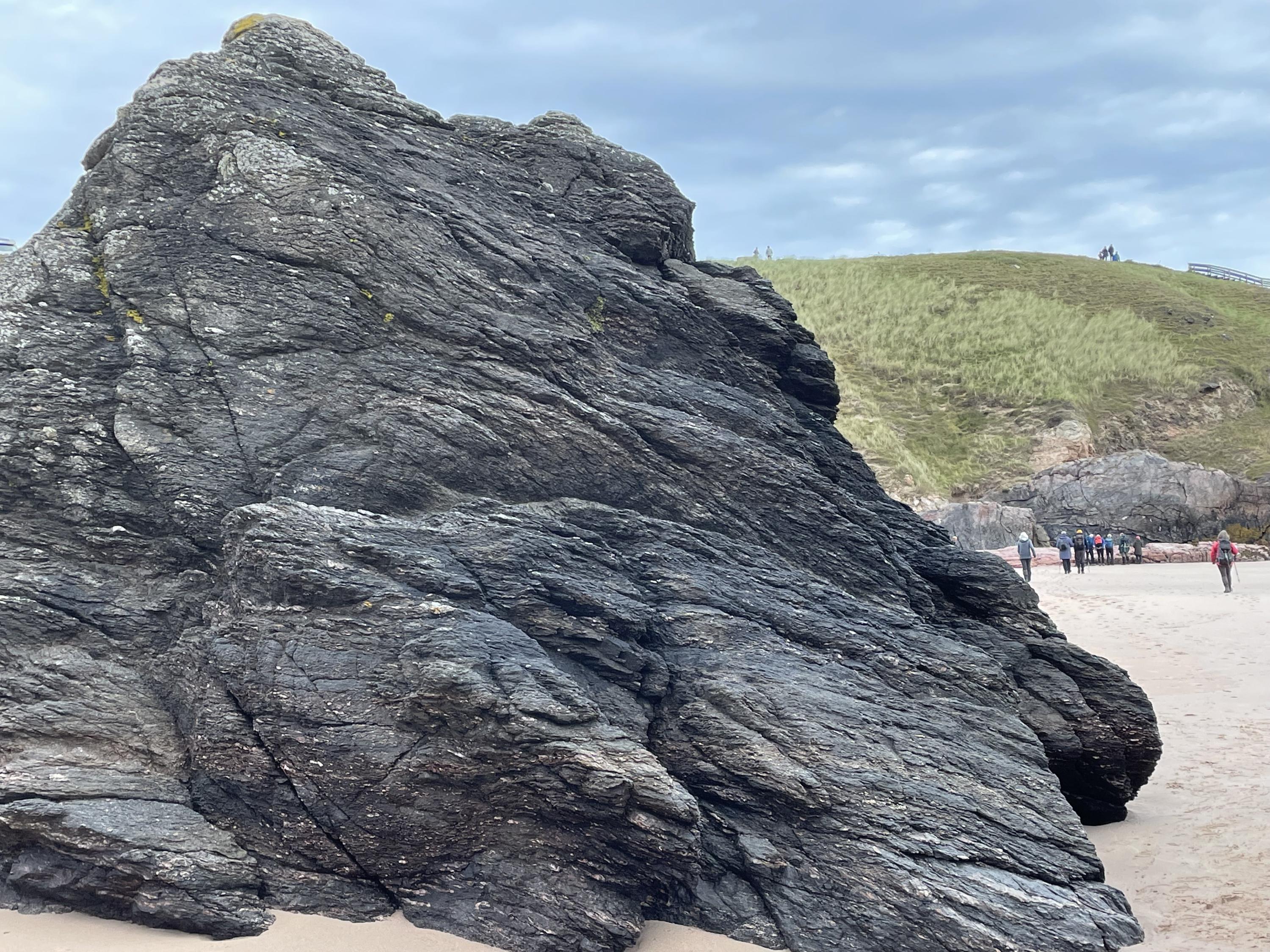
Oystershell Rock, Sango Bay.
Con Gillen
Sept. 23, 2023
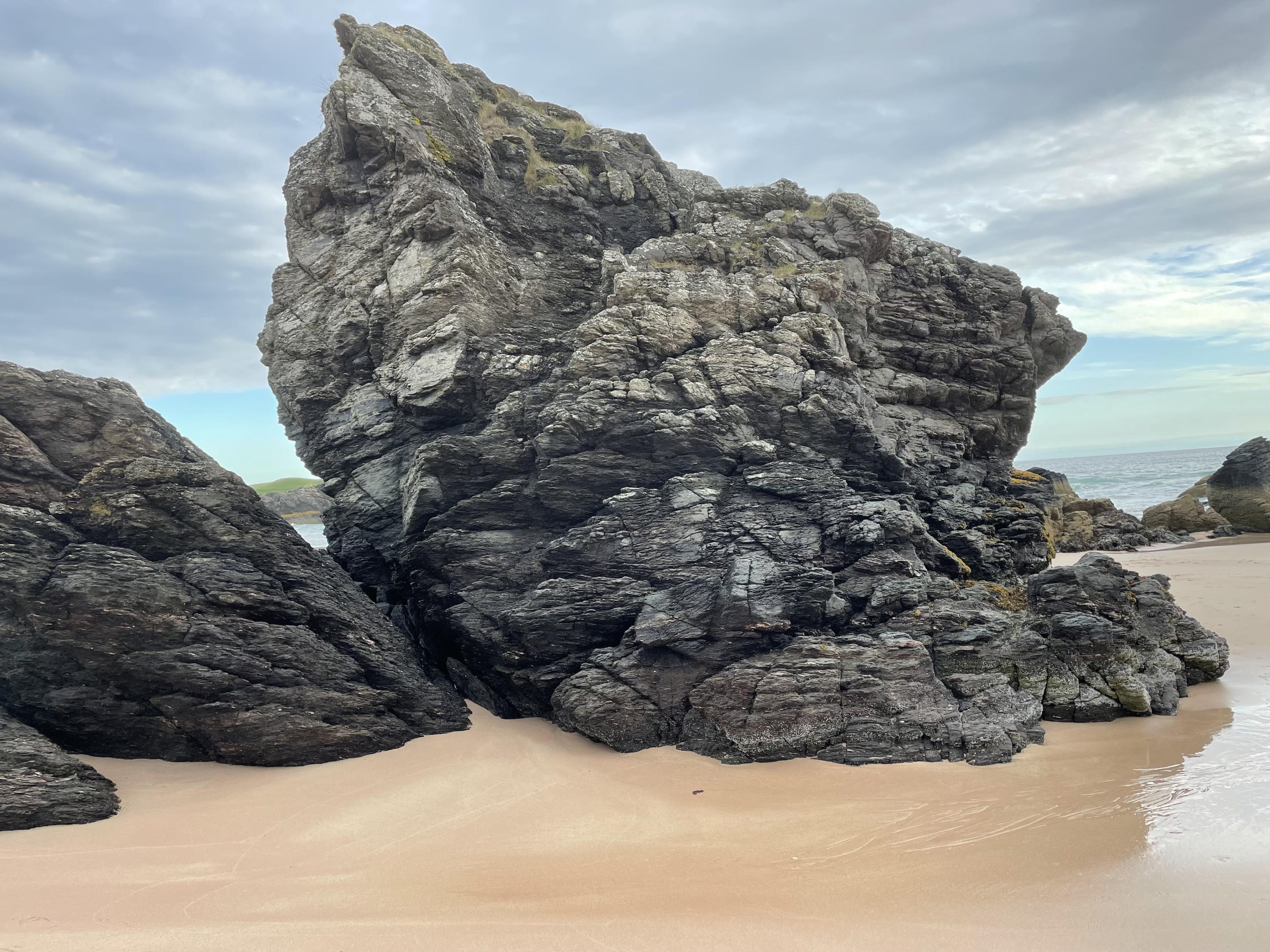
Sea stack (seen at low tide only) of Oystershell Rock, Sango Bay.
Con Gillen
Sept. 23, 2023
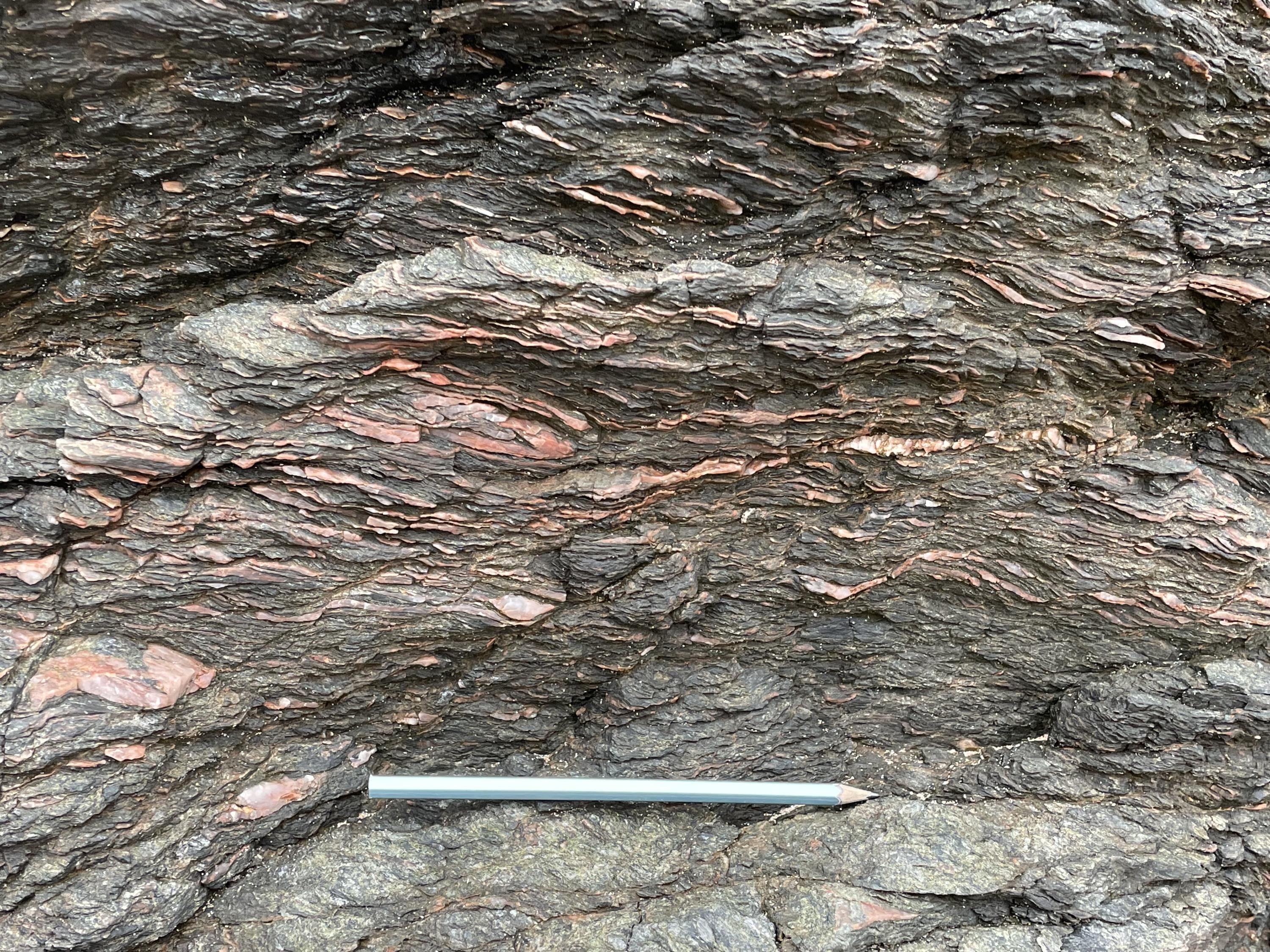
Close-up of Oystershell Rock, Sango Bay, showing multiple minor folds and shears.
Con Gillen
Sept. 23, 2023
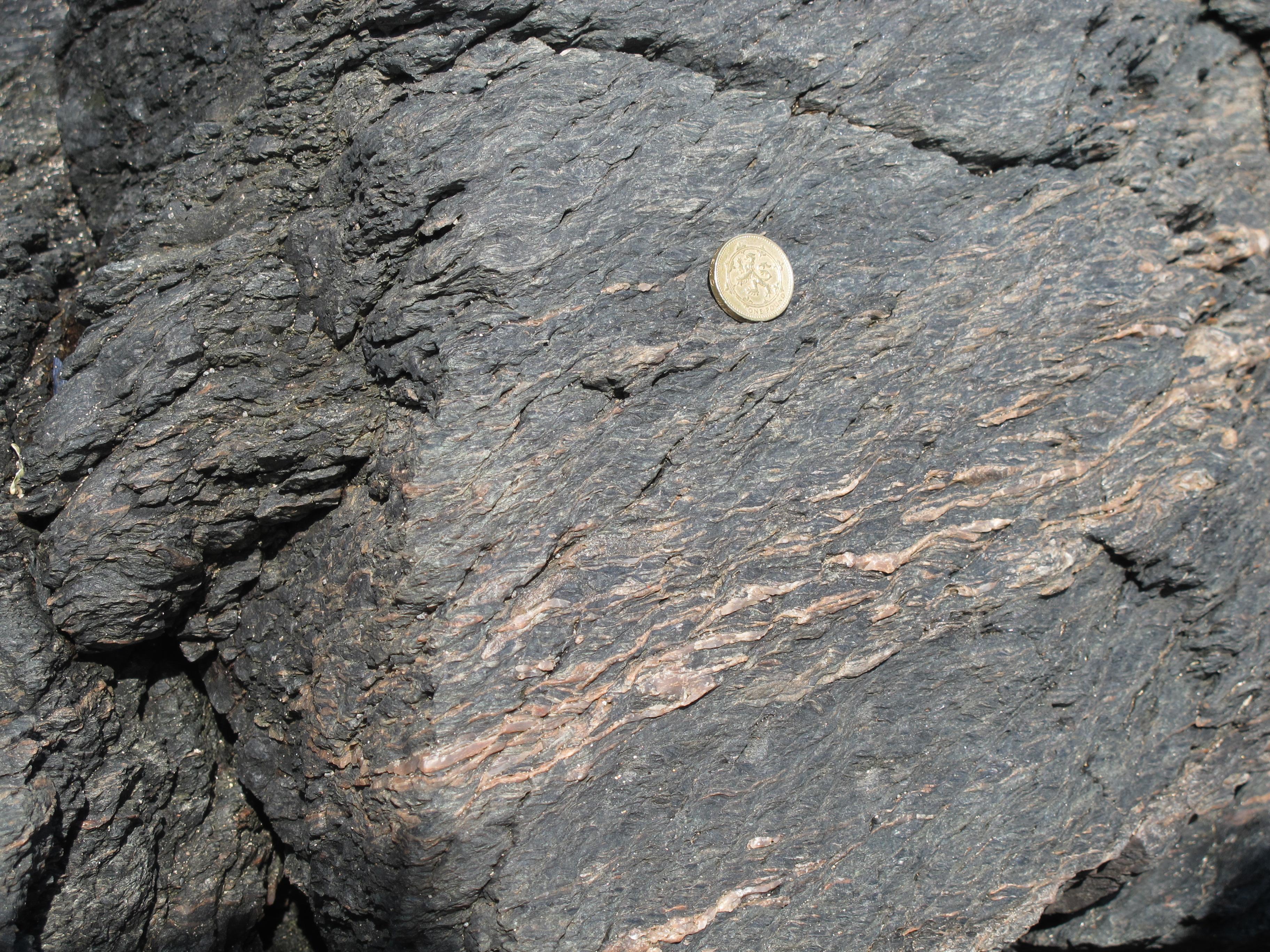
Oystershell Rock, Sango Bay sea stacks, in middle of beach.
Con Gillen
May 26, 2016
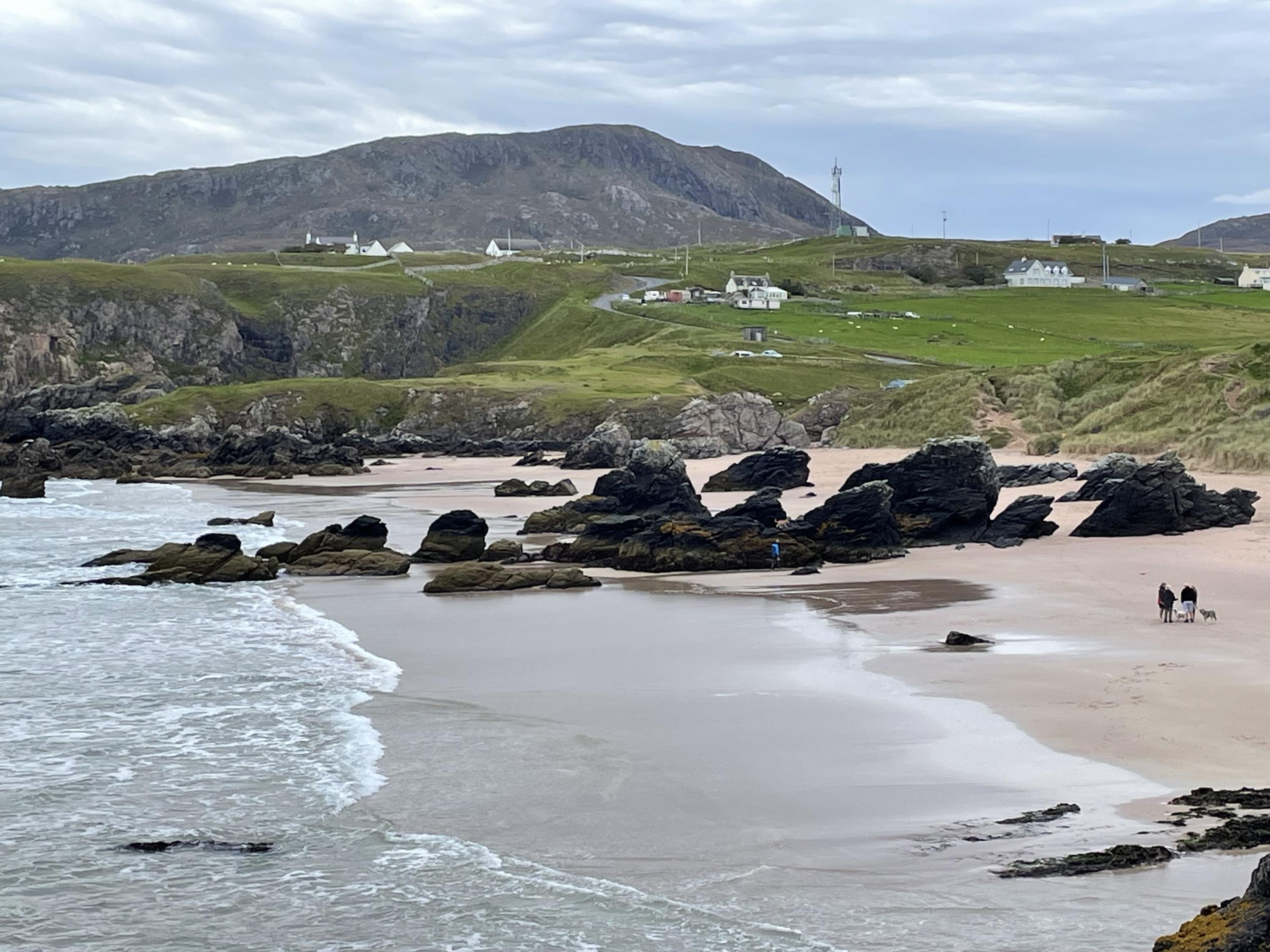
View to black sea stacks of Oystershell Rock, Sango Bay.
Con Gillen
Sept. 23, 2023
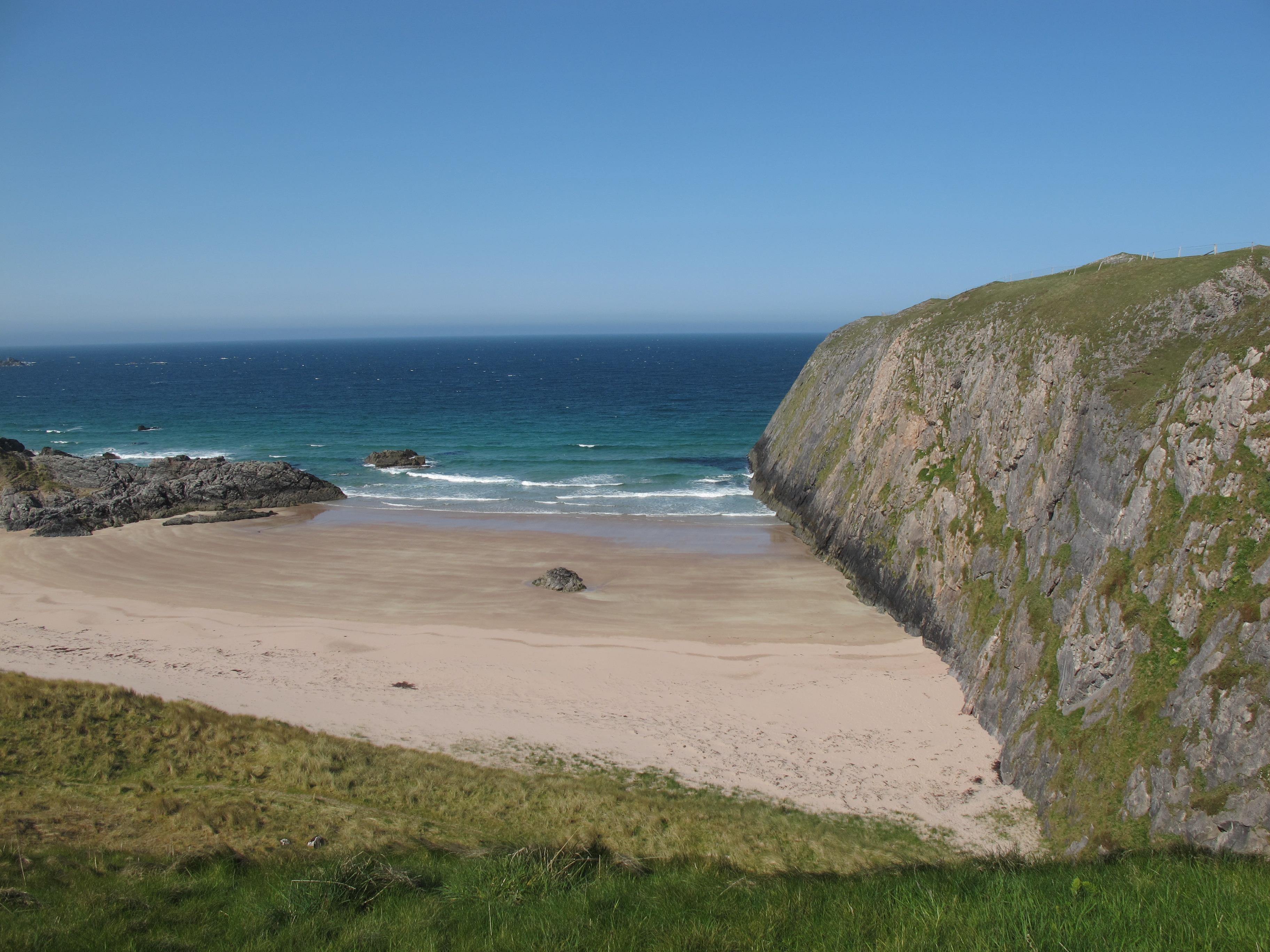
Sango Bay fault on right, with Oystershell Rock exposure on left, Sango Bay, Durness.
Con Gillen
May 26, 2016
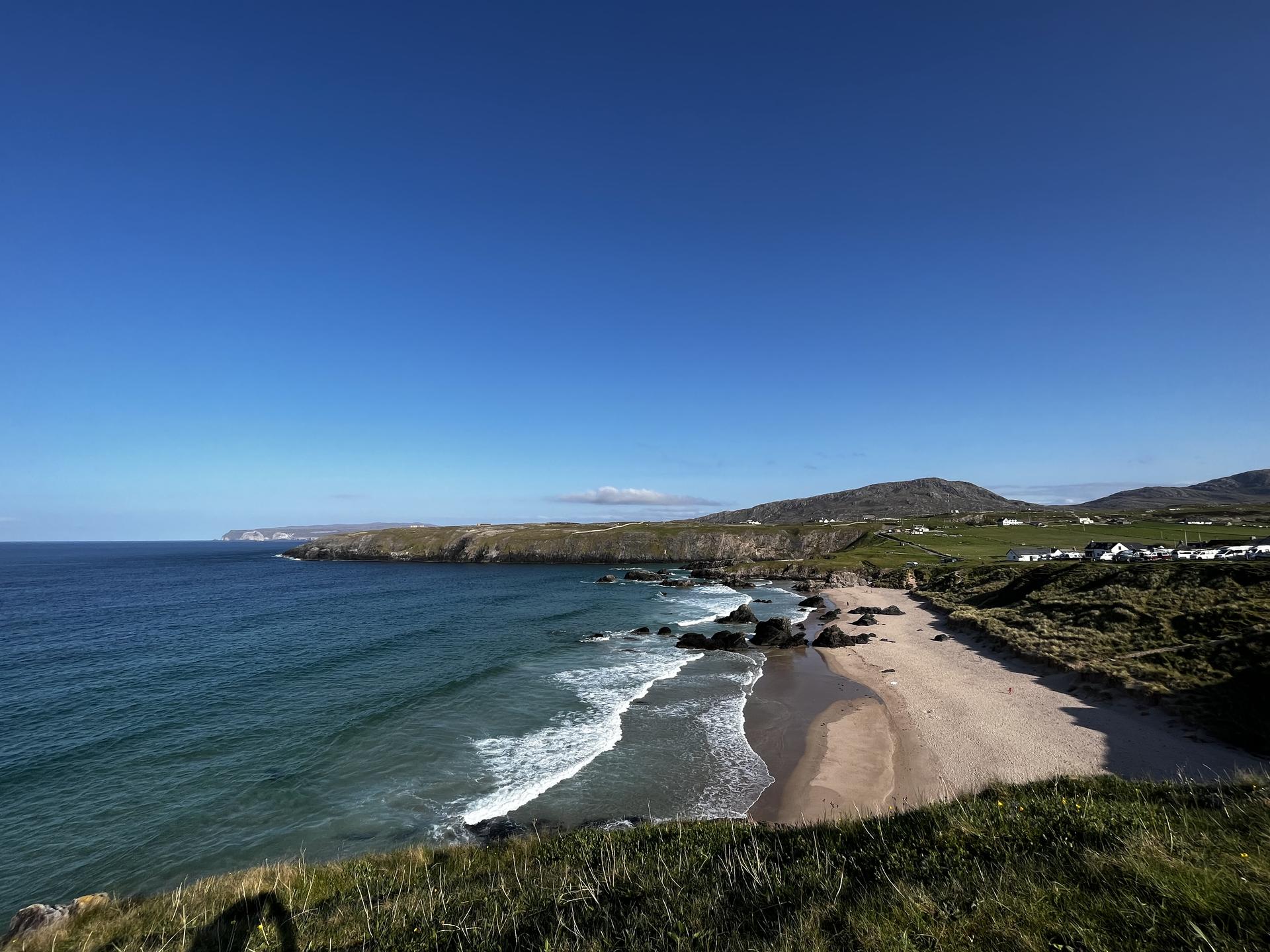
Looking east across Sango Bay
Rob Butler