
Calton Hill
Local Geodiversity site | City of Edinburgh
Local Geodiversity site | City of Edinburgh
Scotland's geosites are chosen because of their local, national or international importance. Take only photos, leave only footprints: avoid causing any damage to this site. You can walk almost anywhere in Scotland without the need to ask permission or keep to paths, but you have a responsibility to care for your own safety, to respect people's privacy and peace of mind and to cause no damage.
The right of access does not extend to quarries, building sites or any land where public access is prohibited, or to the collection of geological samples.
Calton Hill is composed of Carboniferous lavas and deposits of volcanic ash that are very similar to those of Whinny Hill in Holyrood Park, which can be seen from the summit of Calton Hill. Our current understanding is that Calton Hill was once much closer to Whinny Hill but movement along a fault has displaced Calton Hilltop its current position. See https://edinburghgeolsoc.org/downloads/rigsleaflet_caltonhilla4.pdf for details and maps.
This geosite doesn't have a summary yet.
There are no access notes yet.
There are no safety notes yet.
There are no site highlights yet.
There are no further information notes yet.
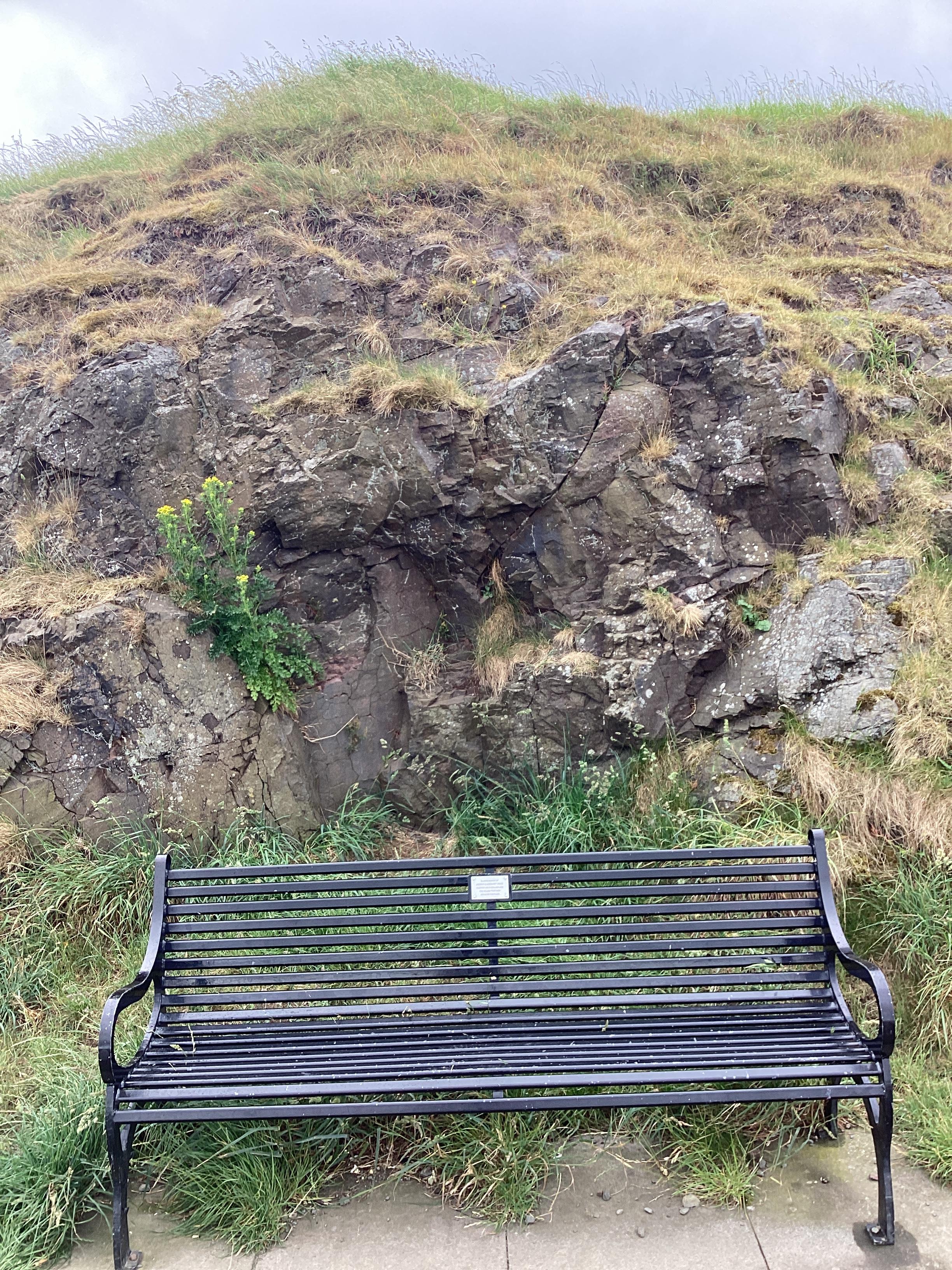
Exposure of Mugearite lavas below hill with trig point
Al McGowan
June 23, 2025
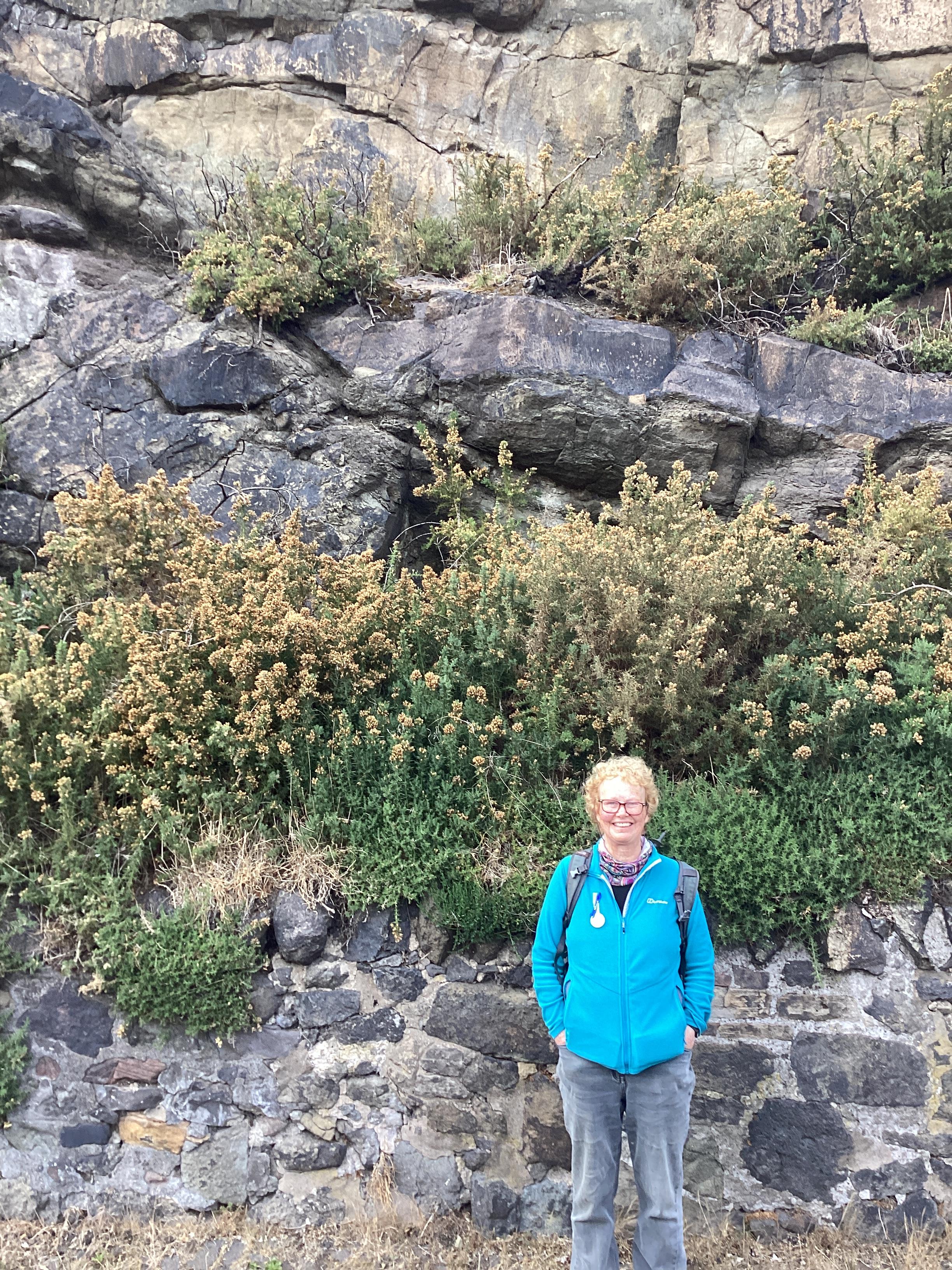
Photo taken on access road. Lower greenish rocks are bedded tuffs that show an uneven contact with the overlying lava unit.
Al McGowan
May 27, 2025
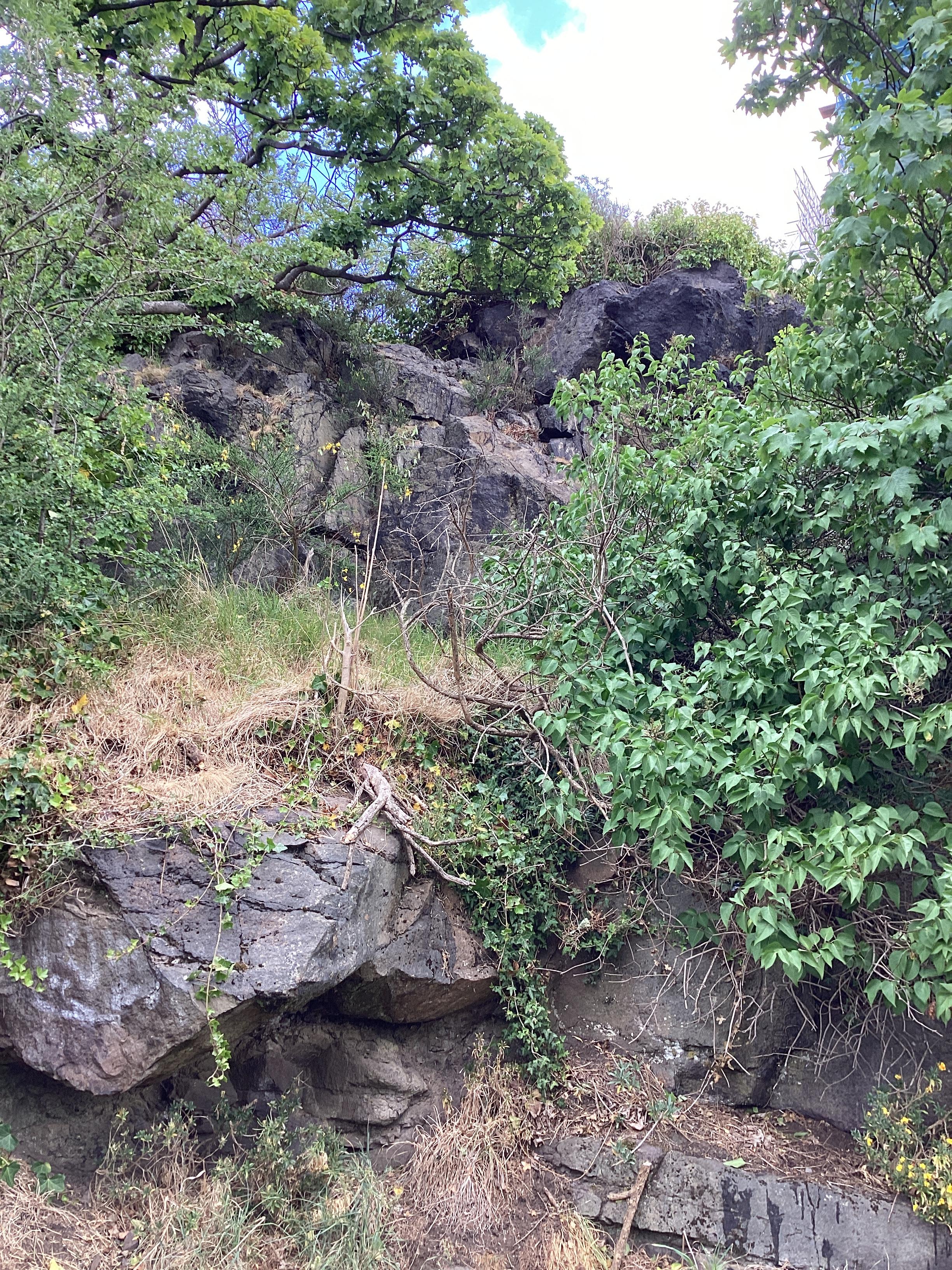
Looking upslope towards Nelson Monument a set of two or three stepped lavas. Identity of individual units is uncertain to the recorder but these are part of the Arthur’s Seat Volcanic Formation.
Al McGowan
May 29, 2025
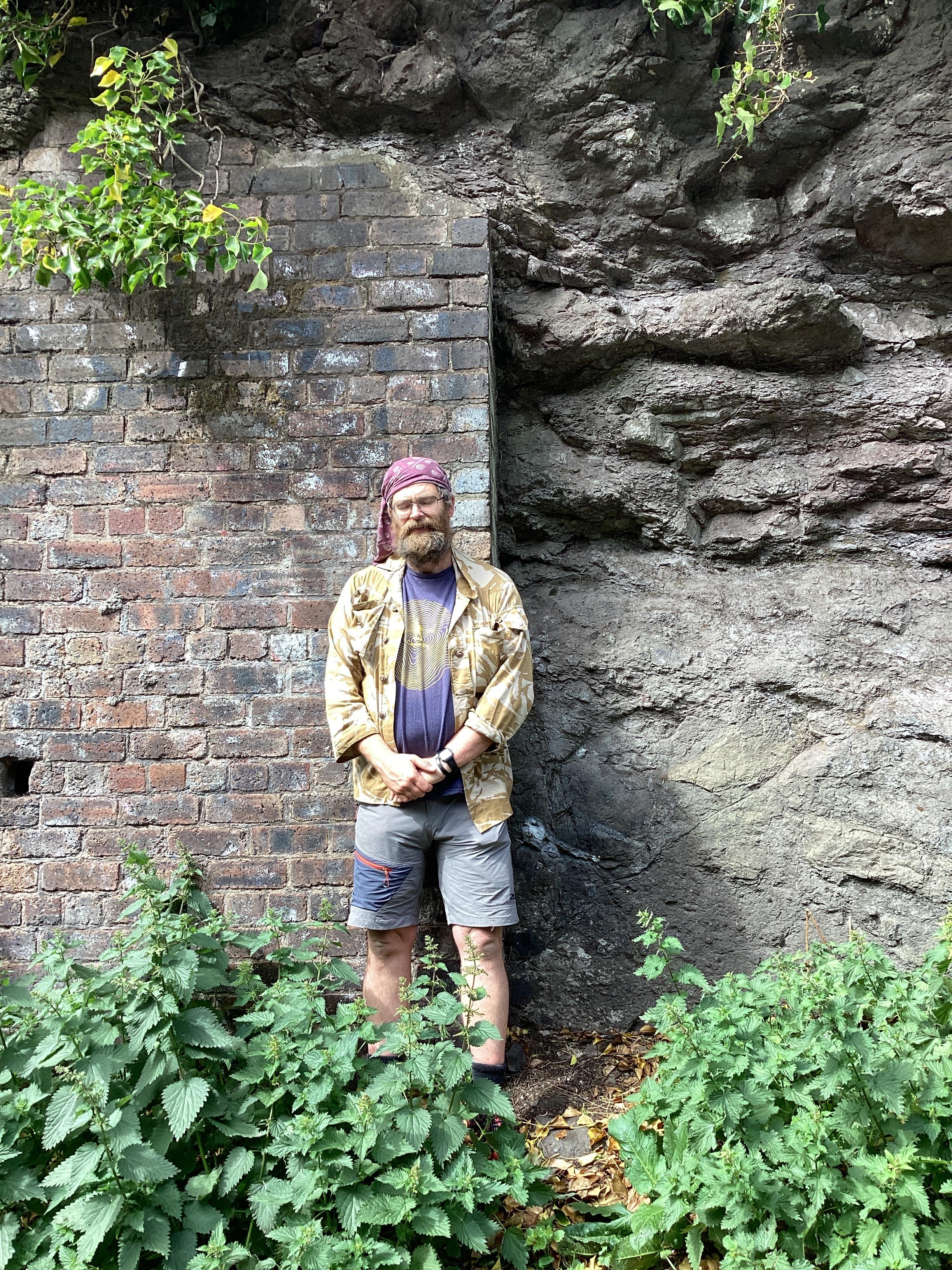
Exposure of volcaniclastic rocks supported by brickwork on western side of Hume Walk. BGS records these as tuff and they are part of the Arthur’s Seat Volcanic Formation. Black (1966) p. 88-90 discuss the Main Calton Ash (2/3). Hume Walk is lined with exposures of these rocks on both sides. Al McGowan for scale is about 1.95 m tall.
Al McGowan
May 29, 2025
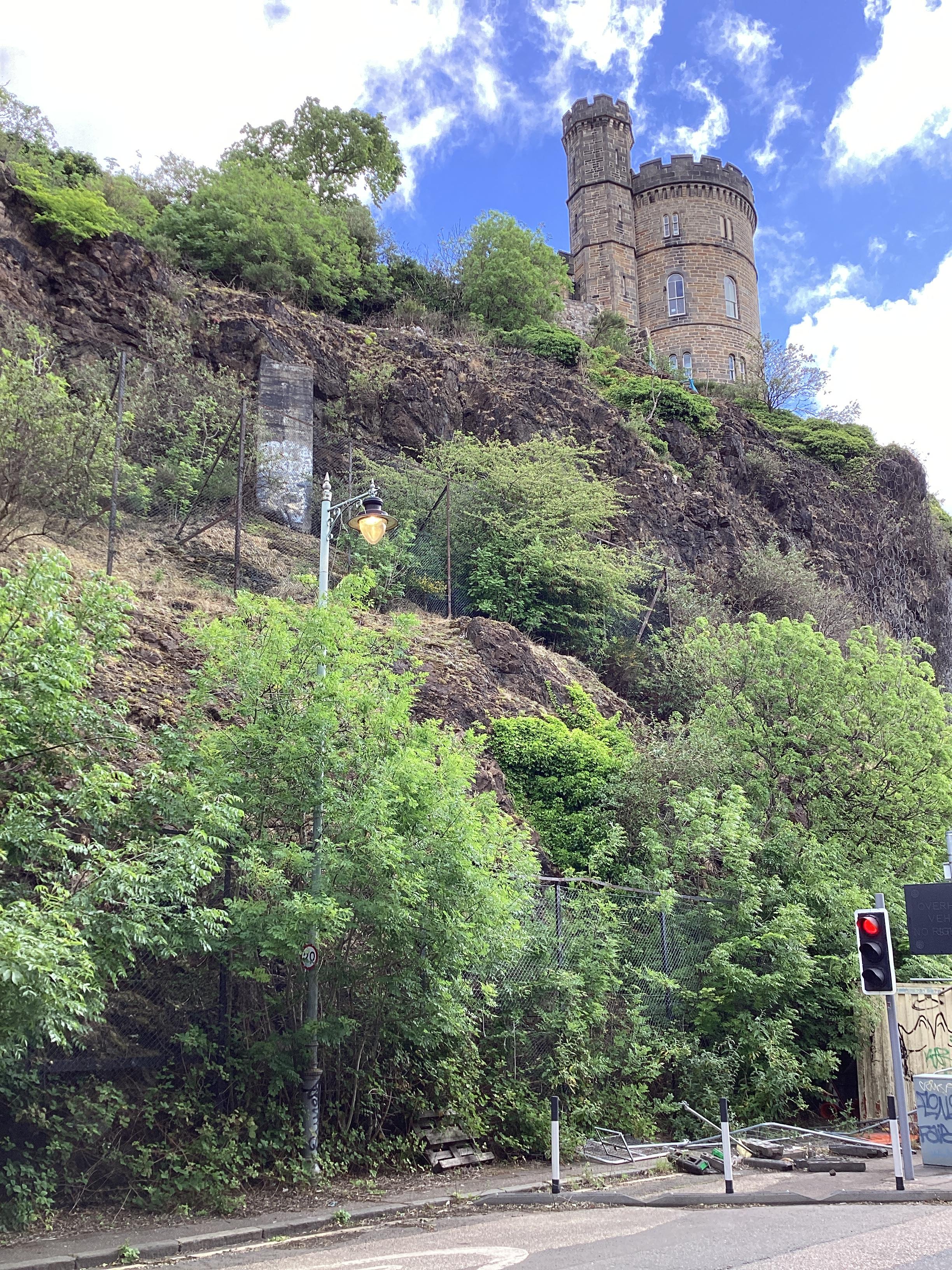
Looking upwards from Calton Road beside Edinburgh Waverley Station drop-off. From BGS data the massive lavas in the photo are part of the Arthur’s Seat Volcanic Formation and are most likely olivine-clinopyroxene basalts of the Craiglockhart type.Note the extensive rock netting, fencing and bolting of part of the face to counter the geohazard this slope presents.
Al McGowan
May 29, 2025